
Osteoporotic Fractures Treatment in Bangalore
Fragile bones shouldn’t mean a fragile life. At Spine DRx in Bangalore, Dr. Ramachandran Govindasamy provides expert, evidence-based treatment for osteoporotic vertebral fractures — from accurate diagnosis to minimally invasive procedures and long-term bone strengthening.
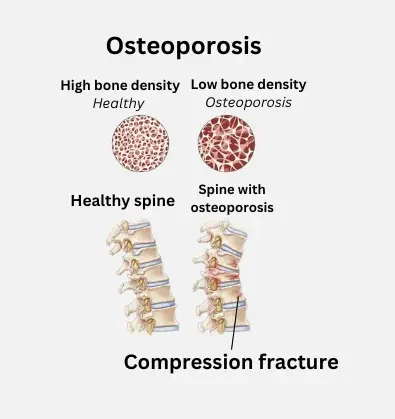
What Are Osteoporotic Vertebral Fractures?
Osteoporosis is a condition in which bones that should be as strong as stone gradually become as brittle as glass. When this affects the spine, even everyday minor forces can cause a vertebra to crack or collapse. These are called osteoporotic vertebral compression fractures (OVCFs), and they are among the most common and undertreated fractures in India.
Unlike traumatic fractures caused by road accidents or falls from height, osteoporotic fractures can occur with minimal force — slipping in the bathroom, sitting down sharply in a chair, travelling over a pothole, or simply bending forward while seated. The severity of osteoporosis determines how minimal the force needs to be to cause a fracture.
India has some of the highest osteoporosis rates in Asia, driven by widespread vitamin D deficiency, poor calcium intake, and low screening rates. Post-menopausal women are at especially high risk, yet are often diagnosed only after a fracture has already occurred.
If left untreated, osteoporotic vertebral fractures can cause progressive forward curvature of the spine (kyphosis), loss of height, chronic pain, and eventually thoracic myelopathy or partial paralysis (paraparesis) as the deformed spine presses on the spinal cord.
Who Is at Risk of Osteoporotic Fractures?
Osteoporotic fractures do not discriminate, but certain groups face significantly higher lifetime risk:
- Post-menopausal Women — Oestrogen deficiency after menopause dramatically accelerates bone loss, making this the single largest at-risk group for osteoporotic vertebral fractures.
- Elderly Men and Women (Age 60+) — Natural age-related bone loss means all elderly individuals carry elevated fracture risk, regardless of gender.
- Long-term Steroid Users — Corticosteroids prescribed for asthma, rheumatoid arthritis, inflammatory bowel disease, and other conditions are a leading cause of secondary osteoporosis.
- Thyroid Hormone Excess — Prolonged hyperthyroidism or over-replacement of thyroid hormones increases bone turnover and leads to progressive bone density loss.
- Poor Nutritional Status — Chronic deficiency in calcium and vitamin D impairs bone mineralisation and compounds age-related bone loss.
- Blood Cancers (Multiple Myeloma) — Myeloma causes lytic bone lesions that severely weaken vertebrae and predispose patients to pathological fractures.
Signs and Symptoms of Osteoporotic Vertebral Fractures
Osteoporotic vertebral fractures are frequently missed or attributed to general age-related back pain. Recognising the characteristic signs early leads to timely and effective treatment.
Sudden Mid or Low Back Pain
Sharp, intense pain in the thoracic or lumbar spine occurring after minimal trauma — a bathroom slip, stepping off a bus, or sudden trunk movement. This is often the very first sign of a new vertebral compression fracture.
Inability to Turn in Bed
Pain is frequently so severe that patients cannot change position without significant discomfort. Many describe needing assistance to sit up or get out of bed, making even basic daily activities extremely difficult.
Girdle Pain (Chest Radiation)
Pain from thoracic vertebral fractures can radiate around the chest wall, mimicking cardiac or pulmonary conditions. This is called girdle pain and is a highly characteristic feature of thoracic osteoporotic vertebral fractures.
Progressive Spinal Kyphosis and Height Loss
Multiple or untreated fractures cause vertebrae to wedge anteriorly, creating a progressive forward stoop. Loss of height and a stooped posture in an elderly person may indicate multiple silent vertebral fractures occurring over time.
Weakness or Numbness in the Legs
In advanced cases, severe kyphosis or retropulsed bone fragments can compress the spinal cord, causing weakness, numbness, or gait instability. This is a neurological emergency requiring immediate specialist assessment.
Treatment Pathway for Osteoporotic Fractures at SpineDRx
Treatment is not one-size-fits-all. Dr. Ramachandran follows a structured, evidence-based pathway to identify the most appropriate intervention for each patient, based on fracture characteristics, bone quality, and overall health.
Step 1: Assessment and Bone Quality Evaluation
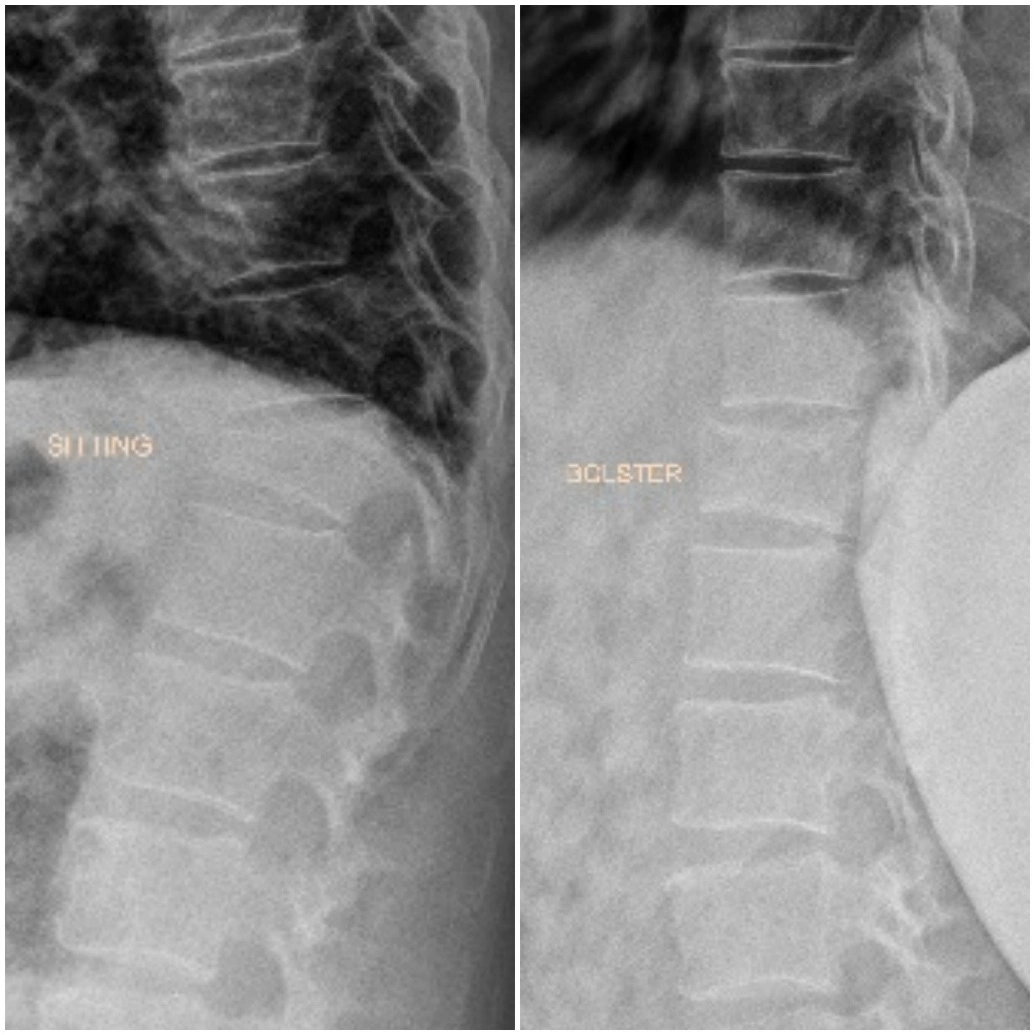
A complete clinical evaluation including neurological examination, DEXA scan, positional X-rays, and MRI where indicated. The fracture pattern, intravertebral void status, bone density T-score, and overall patient health together guide the treatment plan.
Step 2: Conservative Management for Healing Fractures
Many acute osteoporotic fractures will heal with appropriate conservative care. This includes:
- Short-term pain management using analgesics and anti-inflammatory agents
- A structured, supervised mobilisation plan with physiotherapy
- Thoracolumbar orthosis (TLSO brace) where indicated to support the spine
- Correction of nutritional deficiencies: calcium (1000–1200 mg/day) and vitamin D (800–1000 IU/day)
Dr. Ramachandran strongly discourages prolonged bed rest in elderly patients, which risks serious complications: hyponatremia (dangerously low blood sodium), pressure sores (decubitus ulcers), hypostatic pneumonia, and deep vein thrombosis (DVT).
Step 3: Cement Augmentation — Vertebroplasty or Kyphoplasty
Non-healing fractures — characterised by highly osteoporotic bone, persistent intravertebral voids, or ongoing pain beyond 6–8 weeks despite conservative care — are best treated with image-guided cement augmentation. These procedures are performed as day-care procedures in a dedicated spine suite, with most patients mobilised the same day.
Step 4: Long-term Osteoporosis Treatment to Prevent Future Fractures
Treating the fracture without addressing the underlying osteoporosis leaves the patient at high risk of further vertebral and hip fractures. Dr. Ramachandran prescribes targeted bone-strengthening therapies alongside dietary and lifestyle modifications to build bone density and prevent recurrence.
Osteoporosis Treatment: Preventing Future Fractures
Treating a vertebral fracture in isolation — without addressing the underlying osteoporosis — is incomplete management. Each vertebral fracture increases the risk of a subsequent fracture by five-fold. Dr. Ramachandran’s approach always includes targeted pharmacological therapy to strengthen bone and reduce future fracture risk.
Teriparatide
Teriparatide is an anabolic agent — a synthetic form of parathyroid hormone — that actively stimulates new bone formation rather than merely slowing bone loss. It is often the preferred choice after a fragility fracture due to its ability to significantly increase bone density and bone quality over an 18–24 month treatment course.
Denosumab
Denosumab is a monoclonal antibody that inhibits RANK-L, a key driver of bone resorption. It significantly increases bone mineral density at the spine and hip and has been shown to reduce vertebral fracture risk by up to 68%. It is administered by subcutaneous injection every six months.
Why Choose Dr. Ramachandran at SpineDRx for Osteoporotic Fractures Treatment in Bangalore?
Dr. Ramachandran Govindasamy is an expert spine surgeon with specialised training in managing osteoporotic vertebral fractures using both surgical and non-surgical approaches. His clinical philosophy is built on three core principles:
Early Mobilisation Over Bed Rest
Unlike many centres where bed rest remains the default recommendation, Dr. Ramachandran’s protocol is built around early, safe mobilisation. He understands that every day in bed carries serious risks for elderly patients — including hyponatremia, pneumonia, deep vein thrombosis, and pressure sores — and that restoring independence and quality of life quickly is the true goal of treatment.
Treating the Cause, Not Just the Fracture
Dr. Ramachandran addresses the underlying osteoporosis with targeted pharmacological therapy — teriparatide or denosumab — alongside dietary and lifestyle guidance. A fracture treated without addressing the osteoporosis is a fracture waiting to recur.
Day-Care Precision Procedures
Vertebroplasty and kyphoplasty at SpineDRx are conducted in a dedicated spine suite as day-care outpatient procedures. No large incisions, no prolonged hospital stay. The procedures are performed under image guidance for precision, and most patients are mobilised and walking the same day.
FAQs
Osteoporotic fractures occur when bones weakened by osteoporosis break under very minor stress — such as a small fall, sitting down suddenly, or even bending forward. Osteoporosis reduces bone mineral density, making bones brittle and prone to fracture with minimal force. The spine, hip, and wrist are the most commonly affected sites. Post-menopausal women are at highest risk due to oestrogen deficiency. Other high-risk groups include the elderly (both men and women), long-term corticosteroid users, those on prolonged thyroid hormone therapy, individuals with chronic calcium or vitamin D deficiency, and patients with multiple myeloma. The most typical symptom is sudden onset of mid or lower back pain after a minor incident such as slipping in the bathroom or stepping off a bus. The pain can be severe enough to prevent turning in bed and may radiate around the chest wall (girdle pain). Over time, untreated fractures cause progressive kyphosis, loss of height, and in advanced cases, leg weakness or numbness due to spinal cord compression. Diagnosis involves a DEXA scan to measure bone mineral density, weight-bearing X-rays in multiple positions to identify the fracture pattern and intravertebral voids, and MRI to confirm fracture acuity and rule out infection or tumour as the underlying cause. Many fractures heal with conservative management: pain control, a structured mobilisation plan, bracing, and nutritional supplementation. Non-healing or severely painful fractures are treated with cement augmentation — vertebroplasty or kyphoplasty. In all cases, the underlying osteoporosis is addressed with medications such as teriparatide or denosumab to prevent future fractures. In vertebroplasty, bone cement is injected directly into the collapsed vertebra. In kyphoplasty, a balloon is first inflated inside the vertebra to partially restore its height and create a cavity, which is then filled with cement under low pressure. Kyphoplasty can partially correct kyphosis, carries a lower cement leakage risk, and is preferred for more severely collapsed vertebrae. Both kyphoplasty and vertebroplasty are day-care (outpatient) procedures with no large incisions. Most patients are mobilised the same day. There is typically no overnight hospital stay required. Recovery is significantly faster than open spinal surgery. Prolonged bed rest in elderly patients can cause serious and potentially life-threatening complications including hyponatremia (dangerous low blood sodium), pressure sores, hypostatic pneumonia, and deep vein thrombosis (DVT). Early, safe mobilisation after fracture stabilisation dramatically reduces these risks and improves overall outcomes. Dr. Ramachandran uses teriparatide, an anabolic agent that actively stimulates new bone formation, and denosumab, a monoclonal antibody that inhibits bone resorption and significantly increases bone mineral density. Both are complemented by calcium supplementation, vitamin D, and dietary changes. Prevention focuses on improving bone density and reducing fall risk. Key strategies include adequate calcium and vitamin D intake, regular weight-bearing and balance exercise, treatment of hormonal deficiencies, and pharmacological bone protection in high-risk individuals. Routine DEXA scans are recommended for all post-menopausal women and men over 65. If you experience sudden onset of mid or lower back pain after even a minor fall or trivial incident — and you are post-menopausal, elderly, or have known osteoporosis — you should seek specialist assessment promptly. An X-ray and DEXA scan will typically confirm or rule out a fracture. Do not assume it is just muscle pain. Dr. Ramachandran Govindasamy at SpineDRx offers comprehensive osteoporotic fractures treatment across three Bangalore locations: SpineDRx Kasavanahalli (Tuesday, Thursday, Saturday evenings, Tel: 7996997989), SpineDRx Whitefield/Kadugodi (Monday, Wednesday, Friday evenings, Tel: 7996992919), and Aster Whitefield Hospital (Monday to Saturday 9am–5pm, Tel: 9902290933). Appointments can also be booked online at www.spinedrx.com.What are osteoporotic fractures and why do they happen?
Who is most at risk of osteoporotic vertebral fractures?
What are the symptoms of an osteoporotic vertebral fracture?
How is an osteoporotic fracture diagnosed?
What is the treatment for osteoporotic vertebral fractures?
What is kyphoplasty and how does it differ from vertebroplasty?
Is kyphoplasty a major surgery? What is the recovery time?
Why is bed rest discouraged for elderly patients with osteoporotic fractures?
What medications are used to treat osteoporosis after a fracture?
Can osteoporotic fractures be prevented?
How do I know if my back pain after a fall is a fracture?
Where can I get osteoporotic fractures treatment in Bangalore?
Book Your Osteoporotic Fracture Consultation in Bangalore — SpineDRX
An osteoporotic fracture can cause severe back pain, reduced mobility, and impact your daily life. With timely diagnosis and expert care, most osteoporotic spine fractures can be effectively managed, helping you regain strength and independence. Consult Dr. Ramachandran at SpineDRX — Bangalore's trusted destination for osteoporosis fracture treatment. Accurate diagnosis. Personalised treatment. Lasting relief.