
Trusted Treatment for Spinal Infections & Spondylodiscitis in Bangalore
If you have persistent back pain with fever, night sweats, or unexplained weight loss, you may be dealing with spondylodiscitis — a spine infection that starts in the intervertebral disc and spreads to the adjoining vertebrae. Left untreated, it can destroy bone, deform the spine, or compress the spinal cord and nerves. Dr. Ramachandran Govindasamy, a leading spine surgeon in Bangalore, offers biopsy-confirmed, evidence-based Spondylodiscitis treatment in Bangalore — combining accurate diagnosis with medical and, when needed, surgical management.
Spondylodiscitis is treated with 6–18 weeks to 18 months of targeted antibiotic or anti-tubercular therapy based on a confirmed biopsy, with surgery reserved for spinal instability, neurological compression, or abscess drainage. Most patients recover fully with early, correctly targeted treatment.
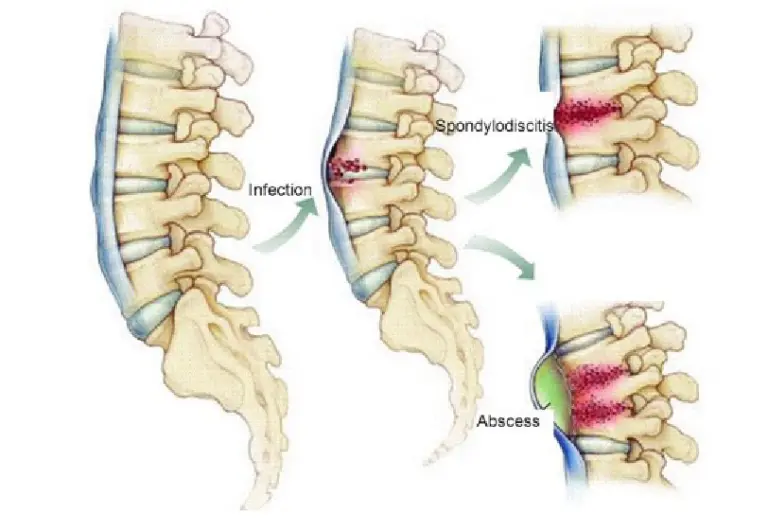
What Is Spondylodiscitis?
Spondylodiscitis is an infection of the intervertebral disc (discitis) that spreads into the neighboring vertebral bodies (vertebral osteomyelitis). In India, the two most common causes — in order of frequency — are:
- Tuberculosis (TB) of the spine — the most common cause in India
- Pyogenic (bacterial) infection
- Fungal infection — comparatively rare, usually in immunocompromised patients
Because TB and bacterial spine infections look similar on scans but need completely different treatment, correct diagnosis before starting treatment is the single most important step — and it's the core of Dr. Ramachandran's approach.
Common Types of Spinal Infections
TB Spondylodiscitis (Spinal Tuberculosis / Pott's Spine)
TB of the spine is highly prevalent in India and can affect anyone — any age, any gender, even otherwise healthy individuals. Many people carry dormant TB bacteria in their lungs; when immunity dips, the bacteria can travel through the bloodstream to the spinal disc and vertebrae, causing pus formation and progressive bone destruction.
Symptoms of TB spine (usually develop over months):
- Chronic neck or back pain
- Evening rise in body temperature, night sweats
- Unexplained weight loss and loss of appetite
- Night pain that disturbs sleep
- Numbness, weakness, or other neurological symptoms
- Spinal deformity (kyphosis/hunchback) or spinal cord compression in advanced cases
Treatment:
For a stable spine, the mainstay of treatment is anti-tubercular therapy (ATT) for 12–18 months. Surgery is reserved for an unstable spine, significant deformity, or neurological compromise. Confirming the diagnosis with a biopsy and testing drug susceptibility of the TB bacteria is essential — this determines which drugs will actually work and prevents drug-resistant TB from developing.
Pyogenic (Bacterial) Spondylodiscitis
Pyogenic spine infections are more common in older adults and people with weakened immunity — uncontrolled diabetes, patients on renal dialysis, liver failure, or those who have recently undergone spine surgery or other invasive procedures. Bacteria enter the bloodstream and settle in the spinal disc, causing rapid pus formation and tissue damage.
Symptoms (usually develop over days, not months):
- Sudden, severe back pain
- High-grade fever
- Rapid decline in general health, often leading to bed rest
Treatment:
Diagnosis relies on blood markers (low hemoglobin, raised WBC/neutrophils, elevated ESR and CRP) plus biopsy or blood/urine cultures to identify the exact bacteria. Standard treatment is IV antibiotics for approximately 6 weeks, tailored to the organism identified. Most cases resolve with antibiotics alone; surgery is considered only to reduce bacterial load, drain an abscess, or enable early mobilization in select cases.
Comprehensive Diagnosis for Spondylodiscitis
Spondylodiscitis is diagnosed through clinical evaluation, advanced imaging tests like MRI, and laboratory investigations to confirm infection and spinal involvement.
| Steps | Purpose |
|---|---|
| Blood tests (ESR, CRP, CBC) | Detect infection/inflammation markers |
| MRI spine | Gold standard — shows disc/bone involvement, abscess, cord compression |
| X-ray & CT scan | Assess bone destruction and spinal stability |
| CT-guided biopsy | Confirms TB vs. bacterial vs. fungal cause and drug sensitivity |
Why Choose Dr. Ramachandran for Spine Infection Treatment in Bangalore?
Many clinicians still start empirical ATT or antibiotics without confirming the organism — a practice that can delay recovery, mask the real diagnosis, or allow the infection to worsen if the wrong drug is used.
Dr. Ramachandran's approach is different: every suspected spondylodiscitis case undergoes a CT-guided biopsy first, and ATT or antibiotic therapy is initiated strictly based on the biopsy report. This evidence-based protocol leads to faster recovery, accurate infection eradication, and avoids the risks of mistreatment or drug resistance.
- 14+ years of dedicated spine surgery experience
- Biopsy-first, evidence-based infection protocol
- Both non-surgical (ATT/antibiotic) and minimally invasive surgical options
- Available across multi Bangalore locations: Whitefield, Kasavanahalli.
FAQs
Spondylodiscitis is an infection that begins in an intervertebral disc and spreads to the adjacent vertebral bones. In India, it's most often caused by tuberculosis (TB), followed by bacterial and, rarely, fungal infection. Persistent back or neck pain that doesn't improve with rest, fever (especially evening rise in TB spine), night sweats, unexplained weight loss, and night pain are common early signs. Bacterial infections tend to cause sudden, severe pain and high fever within days. Yes. With early diagnosis and correctly targeted treatment — anti-tubercular therapy for TB spine or IV antibiotics for bacterial infection — most patients recover fully. Delayed or incorrect treatment increases the risk of bone damage, deformity, or neurological complications. No. Most cases, especially pyogenic (bacterial) infections, respond well to medication alone. Surgery is only needed if the spine is unstable, there's significant deformity, spinal cord/nerve compression, or a large abscess requiring drainage. Spinal tuberculosis typically requires 12–18 months of anti-tubercular therapy (ATT), guided by a confirmed biopsy and drug-sensitivity report. Pyogenic spondylodiscitis is usually treated with about 6 weeks of intravenous (IV) antibiotics, based on the specific bacteria identified through biopsy or culture. TB and bacterial spine infections can look similar on MRI/CT scans but require entirely different treatments. A CT-guided biopsy confirms the exact cause and drug sensitivity, preventing wrong or delayed treatment and reducing the risk of drug resistance. People with uncontrolled diabetes, those on renal dialysis, patients with liver failure, individuals with weakened immunity, and those who have recently had spine surgery or other invasive procedures are at higher risk of pyogenic spondylodiscitis. TB spine can affect anyone, including otherwise healthy individuals. Dr. Ramachandran Govindasamy provides biopsy-confirmed, evidence-based spondylodiscitis treatment at Spine DRx Clinics in Whitefield and Kasavanahalli, Bangalore.What is spondylodiscitis?
What are the early warning signs of a spine infection?
Is spondylodiscitis curable?
Do all spondylodiscitis patients need surgery?
How long does treatment for spine TB take?
How long does bacterial spine infection treatment take?
Why is a biopsy necessary before starting treatment?
Who is at higher risk of spinal infection?
Where can I get expert spondylodiscitis treatment in Bangalore?
Book Your Consultation with
Spinal Infections / Spondylodiscitis
Specialist in Bangalore
Don't self-medicate or delay a suspected spine infection. Early, biopsy-guided treatment gives you the best chance of full recovery without surgery or deformity.