
Kyphoplasty Surgery in Bangalore — Day-Care Vertebral Fracture Relief at SpineDRX
A fractured vertebra can be extraordinarily painful — making it difficult to stand, walk, or even breathe deeply. For elderly patients with osteoporosis, or patients with cancer that has spread to the spine, a vertebral compression fracture can happen suddenly and without warning, dramatically reducing quality of life.
Vertebral compression fractures do not always require major surgery. At SpineDRX, Dr. Ramachandran Govindasamy performs kyphoplasty surgery in Bangalore as a minimally invasive, day-care procedure — using advanced biplanar fluoroscopy imaging, under mild sedation (no general anaesthesia required in most cases), delivering immediate pain relief and allowing patients to resume normal activities within hours.
If you or a family member has been diagnosed with a painful vertebral fracture that has not improved after six weeks of conservative management, kyphoplasty or vertebroplasty at SpineDRX may offer the relief you need — without the risks, recovery time, or complexity of major open spine surgery.
What Is a Vertebral Compression Fracture?
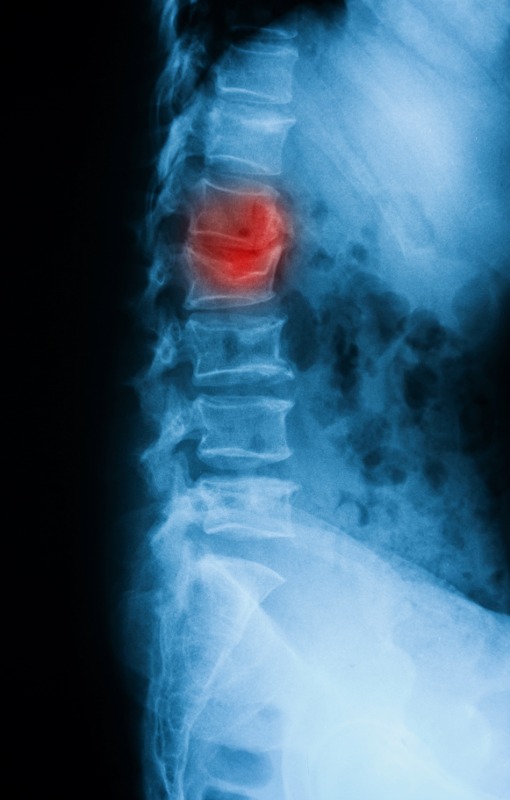
The spine is composed of 33 vertebral bones stacked vertically. Each vertebra is a weight-bearing block that supports the body's load. When bone strength is reduced — most commonly due to osteoporosis, but also due to spinal tumours or trauma — a vertebra can crack and collapse under normal daily loads. This is called a vertebral compression fracture (VCF).
Unlike a traumatic spinal fracture (from a road accident or fall from height), osteoporotic vertebral compression fractures often occur spontaneously — from activities as minor as bending forward, lifting a light object, or even coughing. Multiple fractures can occur over time, gradually causing the spine to develop a forward hunched posture known as kyphosis.
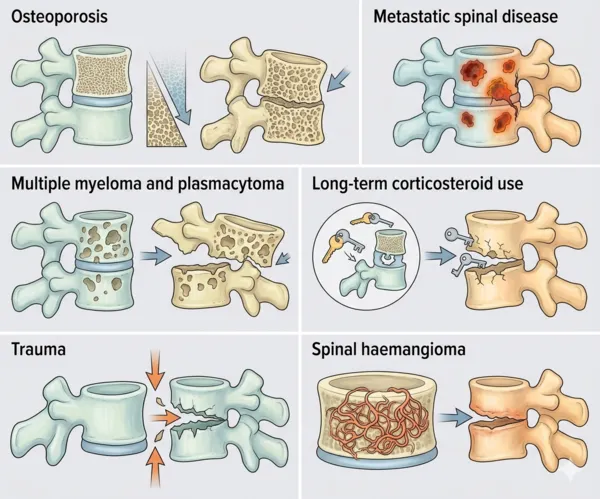
Common causes of vertebral compression fractures
- Osteoporosis — the most common cause; reduced bone density makes vertebrae fragile and susceptible to collapse
- Metastatic spinal disease — cancer that has spread to the vertebral bones, weakening them from within
- Multiple myeloma and plasmacytoma — blood cancers that directly destroy bone
- Long-term corticosteroid use — reduces bone density over time
- Trauma — high-energy injuries in younger patients
- Spinal haemangioma — a vascular bone lesion that can weaken and fracture the vertebra
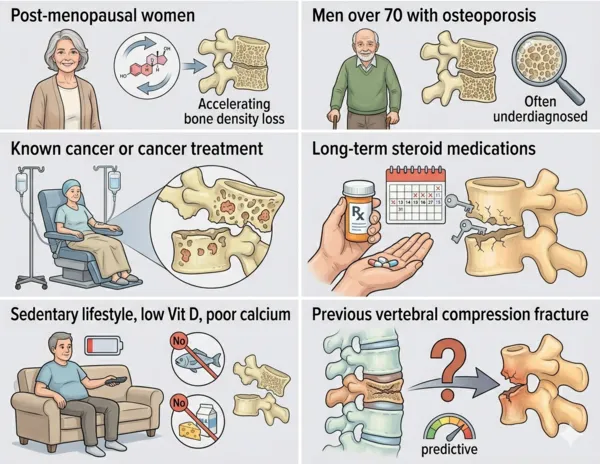
Who is most at risk?
- Post-menopausal women — oestrogen deficiency accelerates bone density loss
- Men over 70 with osteoporosis — often underdiagnosed
- Patients with known cancer or on cancer treatment
- Patients on long-term steroid medications
- Patients with a sedentary lifestyle, low vitamin D, or poor calcium intake
- Patients with a previous vertebral compression fracture — a strong predictor of further fractures
Symptoms of a Vertebral Compression Fracture
Vertebral compression fractures can range from mildly uncomfortable to severely disabling. Common symptoms include:
- Sudden onset of sharp mid-back or lower back pain — often the first sign, particularly after a minor bend or lift
- Pain that worsens with standing, walking, or any movement — and improves when lying down
- Tenderness directly over the fractured vertebra when the spine is pressed
- Gradual loss of height over months or years (due to multiple fractures)
- Increasing forward stoop or hunchback appearance (kyphotic deformity)
- Restricted movement — difficulty bending, turning, or performing daily activities
- Pain radiating around the chest or abdomen — from thoracic vertebral fractures
- In severe cases: nerve compression causing leg weakness, numbness, or loss of bladder/bowel control (requires urgent surgical assessment)
Many patients with osteoporotic vertebral fractures are told to simply rest and take pain medications. If your pain has persisted beyond 6 weeks without significant improvement, or if your quality of life is severely compromised, kyphoplasty surgery in Bangalore at SpineDRX may be appropriate.
Vertebroplasty vs Kyphoplasty — What Is the Difference?
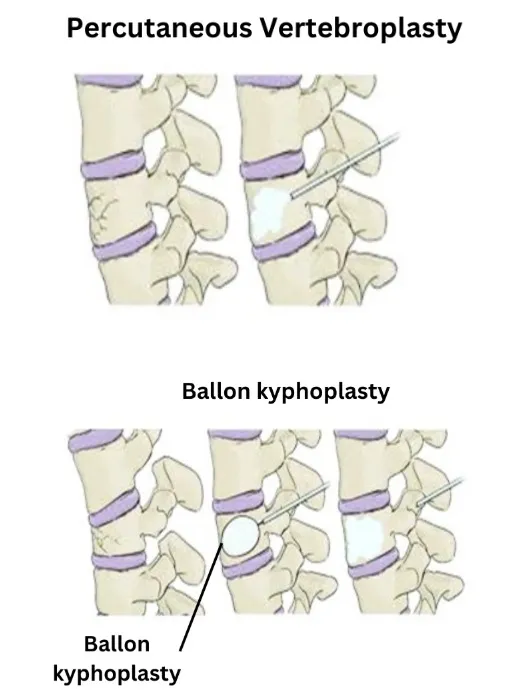
Both vertebroplasty and kyphoplasty are minimally invasive cement augmentation procedures for painful vertebral compression fractures. Dr. Ramachandran performs both at SpineDRX. Here is how they differ
| Feature | Vertebroplasty | Kyphoplasty |
|---|---|---|
| How it works | Two needles inserted; bone cement injected directly | Balloon inflated to restore height; then cement injected |
| Height restoration | No | Yes |
| Cement pressure | Higher pressure | Lower pressure (less leakage risk) |
| Kyphosis correction | Limited | Better |
| Best suited for | Acute fractures | Osteoporotic fractures with height loss |
| Procedure time | 20–30 minutes per level | 30–45 minutes per level |
Dr. Ramachandran selects between vertebroplasty and kyphoplasty based on each patient's fracture characteristics, degree of collapse, bone quality, and clinical goals.
Who Is the Ideal Candidate for Kyphoplasty Surgery?
Ideal Candidates
- Patients with osteoporotic vertebral compression fractures with pain persisting beyond 6 weeks despite conservative treatment (rest, medications, bracing)
- Patients with acute osteoporotic fractures with severe pain and functional disability
- Patients with vertebral fractures caused by spinal metastases or multiple myeloma — for pain relief and stabilisation
- Patients with vertebral haemangioma-related fractures
- Patients with a collapsed or partially collapsed vertebra (kyphotic deformity) where height restoration is desirable
- Elderly patients with significant comorbidities who cannot safely undergo major open spinal surgery or general anaesthesia
Contraindications — When Kyphoplasty is NOT Appropriate
- Fracture with significant posterior bony fragments causing spinal cord or nerve root compression — these require open surgical decompression first
- Spinal infection (osteomyelitis or spondylodiscitis) — active infection must be treated before cement can be placed
- Uncorrectable bleeding disorders
- Allergy to bone cement (PMMA) or contrast agents
- Old, healed fractures without active bone oedema on MRI — cement augmentation is unlikely to provide pain relief for chronic, fully healed fractures
MRI with STIR or fat-suppressed sequences is essential — to confirm active bone marrow oedema, the key predictor of a good pain relief response from kyphoplasty. Dr. Ram reviews all imaging carefully before offering the procedure.
Outcomes and Benefits of Kyphoplasty at SpineDRX Bangalore
PSO is one of the most technically demanding procedures in all of spinal surgery, requiring a surgeon with specialised training, an experienced team, and a fully equipped spine operating theatre. Dr. Ramachandran Govindasamy is one of the few surgeons in Bangalore performing PSO with consistent, excellent outcomes.
| Clinical outcome | What patients at SpineDRX typically experience |
|---|---|
| Pain relief | Significant pain reduction in over 90% of patients with active fractures confirmed on MRI; many report near-complete relief within hours |
| Mobility | Most patients stand and walk within 1 hour of procedure completion |
| Return to activity | Normal daily activities typically resumed same day or next day |
| Hospital stay | Day-care procedure — most patients discharged on the same day |
| Height restoration (kyphoplasty) | Partial to full vertebral height restoration in most acute fractures; reduction in kyphotic deformity |
| Prevention of major surgery | When performed at the right time, can prevent progressive collapse requiring complex fusion surgery |
| Quality of life | Dramatic improvement in independence, sleep quality, mood, and daily function in the majority of patients |
Why Choose SpineDRX for Kyphoplasty Surgery?
- Experienced spine surgeon performing vertebroplasty and kyphoplasty routinely with excellent outcomes
- Unique ability to perform kyphoplasty under local anaesthesia and mild sedation — no general anaesthesia required for eligible patients
- Advanced biplanar fluoroscopy — simultaneous two-plane real-time imaging for maximum precision and safety
- True day-care surgery — patients discharged the same day in most cases
- Immediate pain relief in the majority of suitable patients — often within hours of the procedure
- No bed rest, no external brace required in most cases
- When performed at the right time, can prevent the need for major fusion surgery
- Holistic approach — kyphoplasty combined with post-procedure osteoporosis management to prevent future fractures
- Surgical care at Aster Whitefield Hospital — fully equipped modern facility
- Two convenient clinic locations — Kasavanahalli (Tue/Thu/Sat) and Whitefield (Mon/Wed/Fri)
FAQs
Kyphoplasty is a minimally invasive spine procedure used to treat painful vertebral compression fractures — most commonly caused by osteoporosis or spinal metastases. A balloon is inserted into the collapsed vertebra, inflated to restore height, then removed. The cavity created is filled with PMMA bone cement to stabilise the fracture. The procedure provides rapid pain relief and restores vertebral height and spinal alignment. Dr. Ramachandran performs kyphoplasty surgery at SpineDRX under mild sedation, without the need for general anaesthesia in most patients. In vertebroplasty, bone cement is injected directly into the fractured vertebra under pressure to stabilise it — without height restoration. In kyphoplasty (balloon kyphoplasty), a balloon is first inflated inside the collapsed vertebra to restore height and create a cavity, then cement is injected at lower pressure into the cavity. Kyphoplasty provides better height restoration and kyphosis correction with a lower risk of cement leakage, making it preferable for osteoporotic fractures with significant height loss. No. At SpineDRX. Dr. Ramachandran performs kyphoplasty surgery in Bangalore under mild sedation and local anaesthesia — without general anaesthesia — for eligible patients. This is a significant advantage for elderly patients with heart disease, lung conditions, or other comorbidities that make general anaesthesia risky. The procedure is performed in a specialised spine suite using advanced biplanar fluoroscopy for real-time precision imaging. Kyphoplasty at SpineDRX is a true day-care procedure. Most patients are observed for 1–2 hours after the procedure, are able to stand and walk within approximately an hour, and are discharged on the same day. No prolonged bed rest is required, and no external back brace is needed in most cases. Kyphoplasty is typically recommended when a vertebral compression fracture has caused significant pain that has not improved after 6 weeks of conservative treatment (rest, pain medications, bracing). It can also be considered earlier in patients with severe pain and functional disability, or when fractures are caused by cancer spread to the spine. The key indicator on MRI is active bone marrow oedema — which confirms the fracture is acute and likely to respond well to cement augmentation. Yes — kyphoplasty is one of the safest spine procedures available, particularly for elderly patients, precisely because it avoids major open surgery. At SpineDRX, Dr. Ramachandran's ability to perform the procedure under local anaesthesia and mild sedation rather than general anaesthesia makes it accessible even for medically frail patients who might not otherwise be candidates for surgical intervention. The majority of patients with active vertebral compression fractures (confirmed by bone oedema on MRI) experience significant to complete pain relief — often within hours of the procedure. Pain that had been preventing sleep, standing, or walking frequently resolves rapidly. The degree of relief depends on the acuity of the fracture, the accuracy of patient selection, and the quality of cement fill achieved. Yes — in many cases. If a vertebral fracture is treated promptly with kyphoplasty before the vertebra collapses completely or before adjacent vertebrae are affected, the procedure can stabilise the spine and prevent progressive deformity or neurological compromise that would otherwise require major fusion surgery. Dr. Ramachandran emphasises that timing matters — early treatment yields the best results. Yes — absolutely. Kyphoplasty treats the fractured vertebra but does not treat the underlying bone disease. Without osteoporosis management after the procedure, adjacent vertebral fractures are significantly more likely. Dr. Ram coordinates post-procedure osteoporosis treatment including DEXA scanning, calcium and Vitamin D supplementation, anti-osteoporosis medications, and physiotherapy to protect the spine long-term. You can book an appointment online at spinedrx.com/contact-us, or call 7996997989 for the Kasavanahalli clinic or 7996992919 for the Whitefield clinic. Dr. Ram consults on Tuesday, Thursday, and Saturday evenings at Kasavanahalli, and Monday, Wednesday, and Friday evenings at Whitefield. Hospital consultations at Aster Whitefield are available all days except Sunday, 9 am to 5 pm.What is kyphoplasty surgery?
What is the difference between vertebroplasty and kyphoplasty?
Is kyphoplasty done under general anaesthesia?
How quickly can I go home after kyphoplasty?
When should I consider kyphoplasty for a vertebral fracture?
Is kyphoplasty safe for elderly patients?
How much pain relief can I expect after kyphoplasty?
Can kyphoplasty prevent the need for major spine surgery?
Will I need treatment for osteoporosis after kyphoplasty?
How do I book an appointment for kyphoplasty at SpineDRX Bangalore?
Book Your Consultation — Kyphoplasty Surgery in Bangalore
A vertebral compression fracture does not have to mean months of bed rest, escalating pain, and permanent disability. Kyphoplasty surgery at SpineDRX offers a minimally invasive, day-care solution — performed by an experienced spine surgeon, without general anaesthesia, with immediate pain relief in most patients.
If you or a family member has been diagnosed with a vertebral fracture — whether from osteoporosis, cancer spread to the spine, or trauma — and pain has not improved after six weeks, consult Dr. Ramachandran at Spine DRx today.