
Comprehensive Care for Lumbar Canal Stenosis Treatment in Bangalore
If you struggle to walk more than a few steps without leg cramps, heaviness, or pain that eases when you sit or bend forward, you may have lumbar canal stenosis — a narrowing of the spinal canal in the lower back that compresses the nerves. Dr. Ramachandran Govindasamy, a leading spine surgeon in Bangalore, offers comprehensive Lumbar Canal Stenosis treatment in Bangalore — from conservative care to gold-standard microscopic decompression.
Lumbar canal stenosis is treated based on severity — mild cases respond to physical therapy, pain management, and epidural injections, while significant nerve compression causing walking difficulty (neurogenic claudication) usually needs surgical decompression. Microscopic lumbar internal decompression, which relieves pressure on both sides of the spinal nerves through a one-inch incision, is the current gold-standard surgical treatment worldwide.
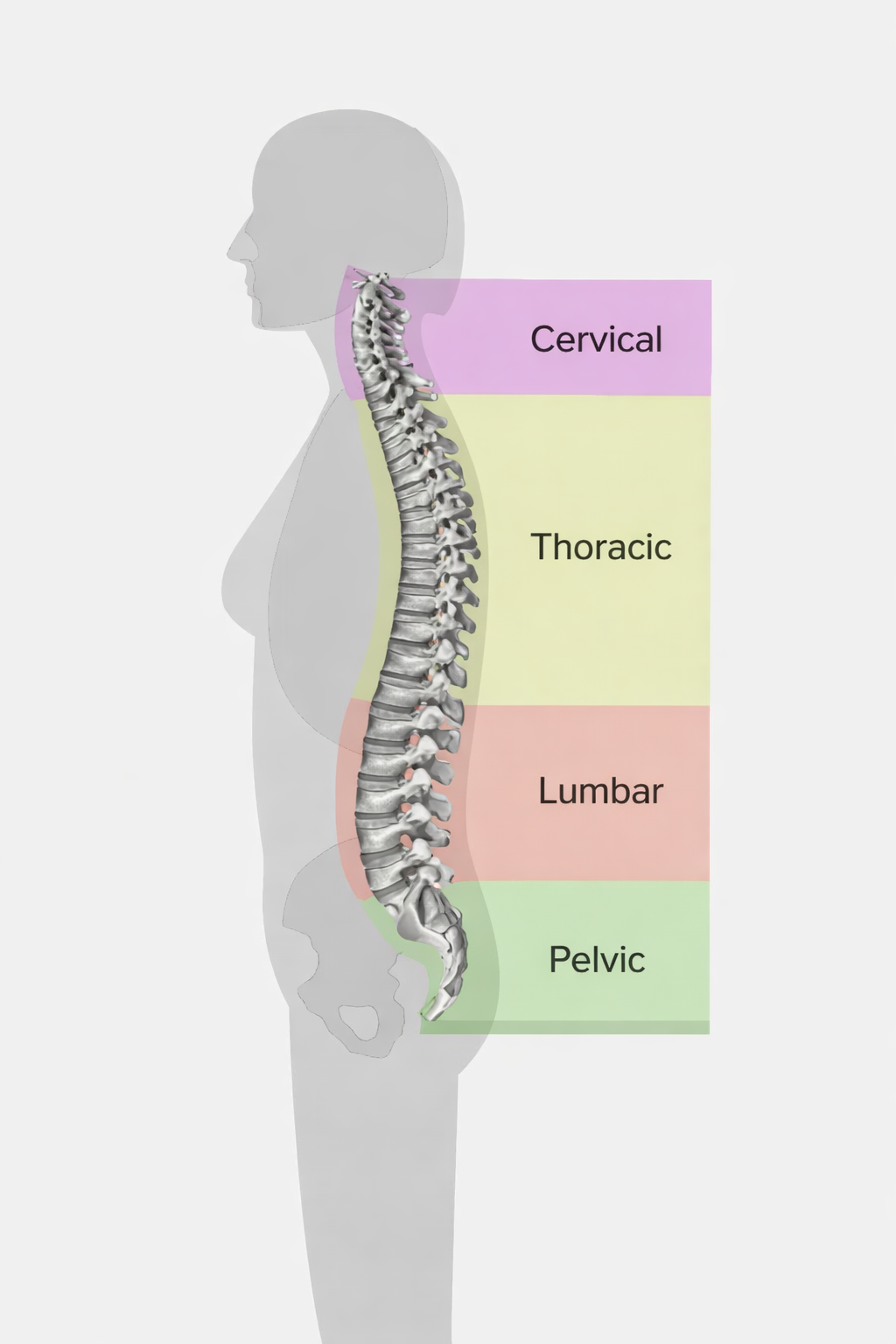
What Is Lumbar Canal Stenosis?
The lumbar spine is the lower part of the back, between the ribs and the pelvis, made up of several vertebrae. Lumbar canal stenosis occurs when the space within this part of the spinal column narrows, compressing the nerve structures that pass through it. This compression is what produces the pain, numbness, and walking difficulty associated with the condition.
What Causes Lumbar Canal Stenosis?
Lumbar canal stenosis is caused by age‑related spinal degeneration, thickened ligaments, herniated discs, or bone spurs that narrow the spinal canal and compress nerves.
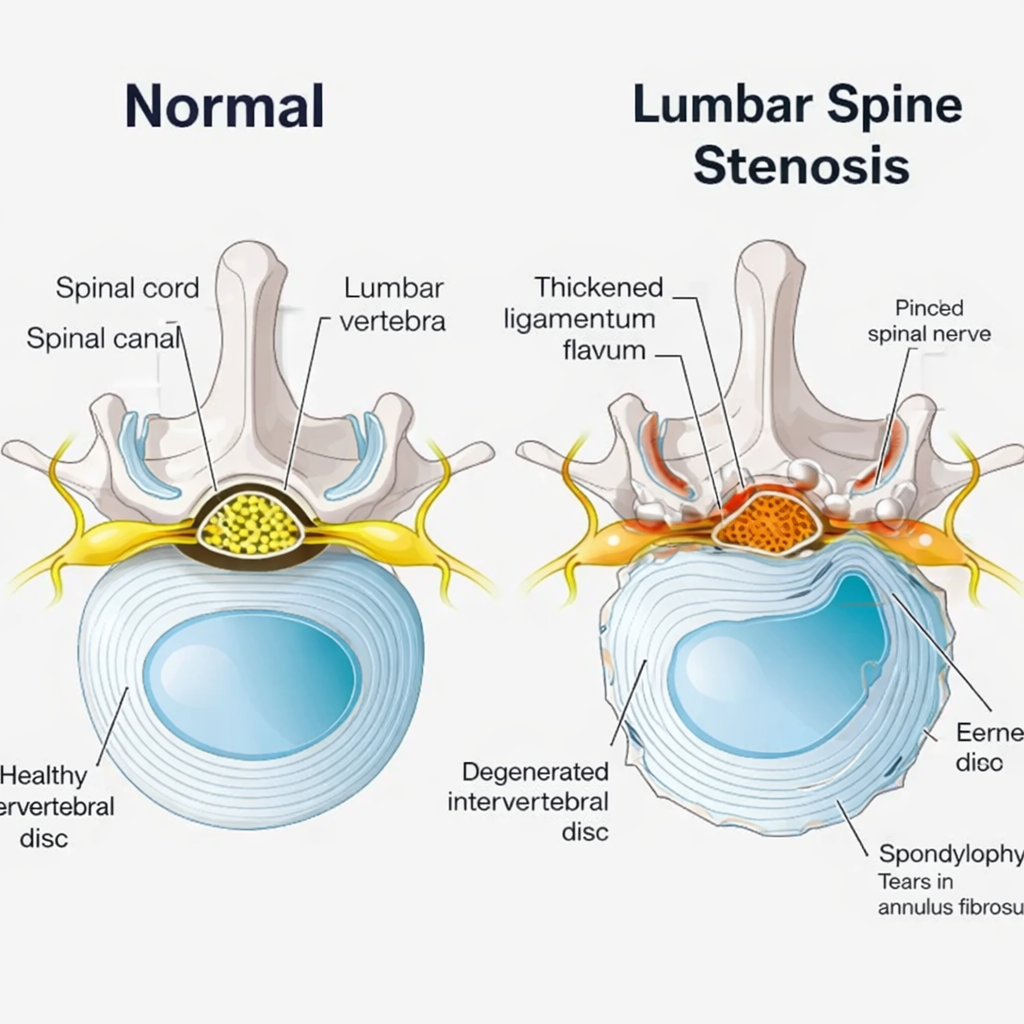
Degenerative spine / spondylosis
The most common cause — a combination of disc prolapse, osteophytes (bone spurs), facet joint hypertrophy, ligamentum flavum thickening, and disc height loss narrows the canal with age. Most common in elderly males with a physically active middle age.
Tumours
Abnormal growths within or around the spinal canal contribute to narrowing
Trauma
Spinal fractures can cause misalignment or dislocation of vertebrae, narrowing the canal
Infections
Pus, infected bone, and disc material can compress the nerves
Symptoms & Effects of Lumbar Canal Stenosis
Lumbar canal stenosis causes back pain, leg weakness, and reduced mobility due to spinal nerve compression, affecting daily movement and comfort.
1. Pain
Typically felt in the lower back and may radiate down the legs. It often worsens with standing or walking and improves with sitting or bending forward.
2. Numbness and Weakness
Compressed nerves can cause numbness, tingling, or weakness in the legs or buttocks.
3. Difficulty Walking (Neurogenic Claudication)
A feeling of heaviness or fatigue in the legs that limits walking distance, often leading people to lean forward or use a walking stick for support.
4. Bladder or Bowel Changes
Severe cases can affect bladder or bowel function, though this is less common and warrants urgent evaluation.
Treatment Options for Lumbar Canal Stenosis in Bangalore
Treatment options for lumbar canal stenosis in Bangalore include advanced non‑surgical therapies, physiotherapy, pain management, and minimally invasive spine surgery performed by experienced specialists.
Non-Surgical Treatments
| Option | What It Involves |
|---|---|
| Physical therapy | Targeted exercises and stretches to improve flexibility, strengthen supportive muscles, and ease symptoms |
| Pain management | Over-the-counter pain relievers, anti-inflammatories, and muscle relaxants for temporary relief |
| Lifestyle modification | Avoiding prolonged standing/walking and maintaining a healthy weight to reduce stress on the spine |
| Assistive devices | Braces or canes to support the lower back and improve mobility |
| Epidural steroid injections | Anti-inflammatory injections into the affected area for short-term pain relief |
Surgical Options
| Procedure | What It Involves |
|---|---|
| Laminectomy | Removes a portion of the vertebral bone to create more space in the spinal canal — the conventional, older surgical approach |
| Laminotomy | Similar to laminectomy but removes a smaller portion of bone, targeting a specific area of compression |
| Spinal fusion | Stabilizes the spine when there's instability or significant bone removal |
| Minimally invasive / microscopic decompression | Endoscopic or microscopic techniques with smaller incisions and less muscle disruption — the current gold-standard, advanced approach |
Dr. Ramachandran's Approach: Microscopic Lumbar Decompression
Only a handful of spine surgeons worldwide perform true microscopic spine surgery. Dr. Ramachandran's training spans both orthopedic and neurosurgical spine principles, with advanced microsurgical technique. Using an operating microscope, he decompresses the entire neural structures through a single incision of about one inch — releasing pressure on both sides of the spinal nerves from one side (Lumbar Internal Decompression), the gold-standard technique accepted worldwide.
- Faster recovery, even among elderly patients
- Minimal blood loss
- Shorter hospital stay — often a day-care procedure
- Both neural pathways decompressed through a single small incision
- 14+ years of dedicated spine surgery experience across a wide range of spine conditions
- Available across multi Bangalore locations: Whitefield, Kasavanahalli
FAQs
Lumbar canal stenosis is a narrowing of the spinal canal in the lower back that compresses the nerves passing through it, causing pain, numbness, weakness, and difficulty walking. Common symptoms include lower back pain that radiates down the legs, numbness or weakness in the legs or buttocks, and difficulty walking long distances (neurogenic claudication) that improves with sitting or bending forward. The most common cause is age-related degeneration of the spine (spondylosis) — a combination of disc prolapse, bone spurs, facet joint enlargement, and ligament thickening. Less common causes include tumours, trauma, and spinal infections. Yes, mild to moderate cases often respond to physical therapy, pain management, lifestyle changes, assistive devices, and epidural steroid injections. Surgery is considered when symptoms are severe or don't improve with conservative care. Neurogenic claudication is leg heaviness, fatigue, or pain that develops with walking or standing due to nerve compression in lumbar canal stenosis, and typically eases with sitting or bending forward. Microscopic lumbar internal decompression is considered the gold-standard treatment worldwide. It decompresses both sides of the spinal nerves through a single small incision, offering faster recovery and less blood loss than conventional laminectomy. Yes. Because it involves a smaller incision, minimal blood loss, and less tissue disruption, microscopic decompression is generally well tolerated by elderly patients and allows for a quicker recovery, often as a day-care procedure. With microscopic lumbar decompression, many patients recover quickly enough that the procedure can be done on a day-care basis, though the exact stay depends on the individual case and overall health. Dr. Ramachandran Govindasamy provides comprehensive lumbar canal stenosis treatment, including microscopic decompression, at Spine DRx Clinics in Whitefield and Kasavanahalli, Bangalore.What is lumbar canal stenosis?
What are the symptoms of lumbar canal stenosis?
What causes lumbar canal stenosis?
Can lumbar canal stenosis be treated without surgery?
What is neurogenic claudication?
What is the gold-standard surgery for lumbar canal stenosis?
Is microscopic spine surgery safe for elderly patients?
How long is the hospital stay after lumbar decompression surgery?
Where can I get expert lumbar canal stenosis treatment in Bangalore?
Book Your Consultation — Lumbar Canal Stenosis Specialist in Bangalore
Don't let leg pain or difficulty walking limit your life. Early evaluation of lumbar canal stenosis can identify the right treatment path — conservative or surgical — before symptoms progress.