
Comprehensive Spinal Fracture Treatment in Bangalore
A spinal fracture is a break in one or more of the vertebrae — the bones that stack up to form the spine and protect the spinal cord. Because the spine also houses the body's central neural pathway, a fracture here is not like a broken arm or leg: it can affect movement, sensation, and in severe cases, bladder or bowel control. If you or a family member is searching for spinal fracture treatment in Bangalore, timely diagnosis and the right treatment plan make the difference between a full recovery and long-term disability.
At SpineDrx, Dr. Ramachandran Govindasamy provides comprehensive evaluation and personalized treatment for all types of spinal fractures. Depending on the severity and stability of the injury, treatment may include pain management, bracing, minimally invasive procedures, or advanced spinal surgery. Our goal is to relieve pain, protect the spinal cord, restore spinal stability, and help patients return to an active, independent life as quickly and safely as possible.
Understanding the Causes of Spinal Fractures
Spinal fractures are most often the result of sudden, high-energy trauma, though weakened bone from age or disease can cause a fracture from even minor stress. Common causes seen at our Bangalore clinics include:
- Road traffic accidents — the leading cause of traumatic spinal fractures in urban India
- Falls from height — construction sites, staircases, or domestic falls
- Sports injuries — diving, contact sports, cycling accidents
- Osteoporosis — brittle bones that fracture under normal load, common in elderly patients (see our dedicated osteoporotic fracture treatment page)
- Direct trauma or violence
Comprehensive Care for All Types of Spinal Fractures
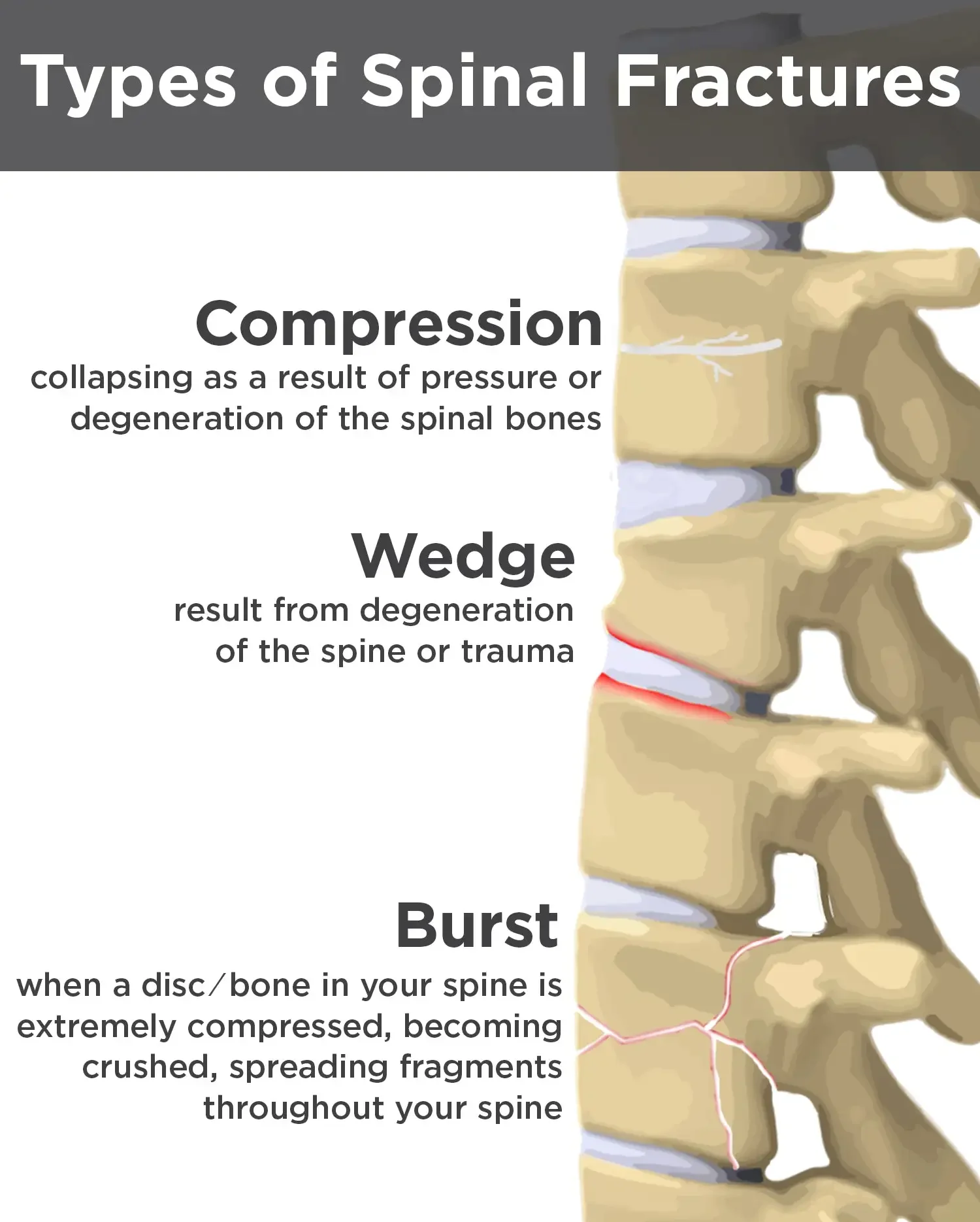
Fractures are classified by shape, mechanism, and stability. Correctly identifying the type is the first step toward safe, effective treatment:
| Type | What Happens |
|---|---|
| Compression fractures | the front of the vertebra collapses; common in osteoporosis |
| Burst fractures | The vertebra shatters in multiple directions, often pushing fragments toward the spinal cord |
| Wedge fractures | One side of the vertebra collapses more than the other |
| Chance fractures | A horizontal fracture across the vertebra, typically from seatbelt-related trauma |
| Laminar fractures | Affect the bony arch that protects the spinal cord |
| Pars fractures | Occur in the connecting bone segment, common in athletes |
Warning Signs & Symptoms of a Spinal Fracture
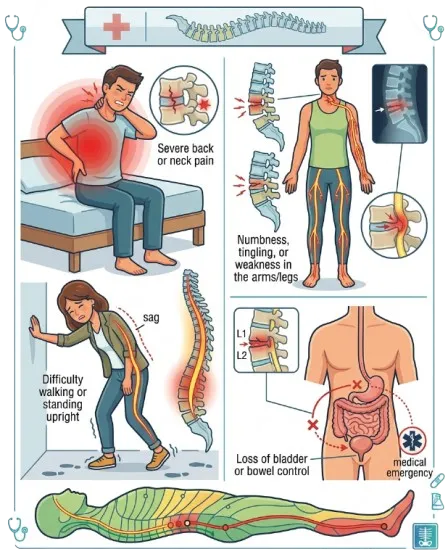
If you experience any of the following symptoms after a fall, accident, or spinal injury, seek immediate medical evaluation. Prompt diagnosis and treatment can help prevent permanent nerve damage and improve recovery outcomes.
- Severe back or neck pain that worsens with movement or standing
- Numbness, tingling, or weakness in the arms or legs
- Difficulty walking, standing, or maintaining balance
- Loss of bladder or bowel control (a medical emergency requiring urgent care)
- Visible spinal deformity, swelling, or tenderness after an injury
To determine the severity of the injury, spine specialists use the ASIA (American Spinal Injury Association) Impairment Scale to assess neurological function, muscle strength, and sensation. This standardized grading system helps guide the urgency of treatment and the most appropriate management plan for each patient.
First Aid: What to Do Before Reaching the Hospital
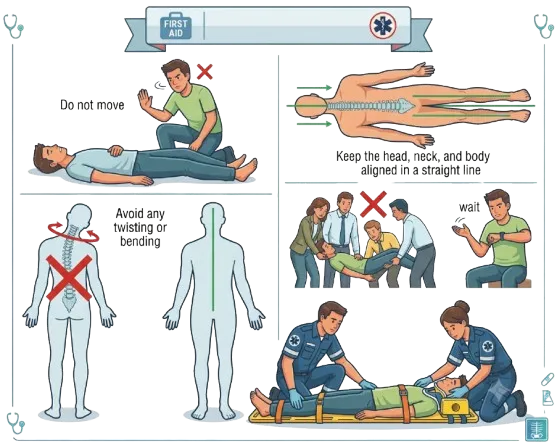
1. Do not move the person unless absolutely necessary
2. Keep the head, neck, and body aligned in a straight line at all times
3. Avoid any twisting or bending of the neck or back
4. If trained help is unavailable, wait for paramedics rather than attempting to lift the person
5. Once emergency responders arrive, they will use a spine board and Philadelphia collar for safe transport
How Is a Spinal Fracture Diagnosed?
Once at the hospital, our team uses a combination of imaging to confirm the fracture and assess spinal stability:
X-rays
Initial screening for alignment and fracture location
CT scan
Detailed bone imaging to classify fracture pattern and stability
MRI
Evaluates soft tissue, ligament injury, and spinal cord compression
Fracture stability is scored using classification systems such as TLICS (Thoracolumbar Injury Classification and Severity Score) and the AO Spine classification. This score, combined with the ASIA neurological grade, determines whether conservative or surgical treatment is recommended.
Spinal Fracture Treatment Options in Bangalore
1. Conservative (Non-Surgical) Treatment
- For stable fractures without neurological deficit, non-surgical management is often sufficient:
- Structured bed rest during the acute phase
- Bracing — TLSO brace or lumbosacral (LS) corset to support the spine while it heals
- Pain management with analgesics
- Gradual, supervised mobilisation and physiotherapy
2. Minimally Invasive Surgery
Unstable fractures, or those with nerve/spinal cord involvement, require surgical stabilisation. Dr. Ramachandran specialises in minimally invasive techniques that reduce blood loss, scarring, and recovery time compared to traditional open surgery, including:
- Vertebroplasty & Kyphoplasty — cement augmentation to stabilise compression fractures, especially in osteoporotic patients
- Percutaneous pedicle screw fixation — stabilises the spine through small incisions
- Anterior reconstruction — for burst fractures, to rebuild the fractured vertebral body and restore spinal height
- Decompression surgery — mandatory when fragments compress the spinal cord or nerves, to prevent or reverse neurological damage
Why Choose Dr. Ramachandran Govindasamy for Spinal Fracture Treatment in Bangalore?
Dr. Ramachandran Govindasamy is a specialist spine surgeon with focused expertise in trauma and fracture management. His approach prioritises:
- Minimally invasive techniques for faster recovery and reduced surgical trauma
- Precision classification (TLICS/AO-based) to avoid unnecessary surgery where conservative care is safe
- Anterior reconstruction expertise for complex burst fractures
- Care coordinated across two clinics (Whitefield & Kasavanahalli) for surgical cases
Recovery After Spinal Fracture Treatment
Recovery timelines depend on fracture severity and treatment type. Stable fractures managed conservatively often improve over 6–12 weeks with bracing and physiotherapy. Surgically treated fractures generally allow earlier mobilisation due to spinal stability being restored immediately, followed by a structured rehabilitation programme to rebuild strength and prevent recurrence — particularly important for osteoporotic patients.
FAQs
No. Stable spinal fractures without neurological symptoms are often treated conservatively with bracing, rest, and pain management. Surgery is reserved for unstable fractures or those causing nerve or spinal cord compression. Conservatively managed fractures typically heal in 6 to 12 weeks with bracing and physiotherapy. Surgically stabilised fractures often allow faster mobilisation, with full rehabilitation continuing over several months depending on severity. Do not let the person sit, stand, or walk. Keep the head and body aligned, avoid moving the neck, and wait for trained paramedics who can use a spine board and cervical collar for safe transport to a hospital. X-rays provide initial screening, CT scans give detailed bone imaging to classify the fracture, and MRI assesses soft tissue and spinal cord involvement. Together these determine fracture stability and the right treatment path. Yes. Osteoporosis weakens vertebral bone, making compression fractures possible even from minor falls or everyday movements. These are common in elderly patients and are often treated with vertebroplasty or kyphoplasty. Dr. Ramachandran Govindasamy provides spinal fracture evaluation and treatment through SpineDRX clinics in Whitefield and Kasavanahalli, Bangalore with surgical care available.Is spinal fracture treatment always surgical?
How long does recovery take after a spinal fracture?
What should I do immediately after a suspected spinal injury?
Which tests are used to diagnose a spinal fracture?
Can osteoporosis cause a spinal fracture?
Where can I get emergency spinal fracture treatment in Bangalore?
Book a Consultation for Spinal Fracture in Bangalore
Don't ignore severe back pain after a fall or accident. Early evaluation of a spinal fracture can prevent complications and improve recovery.